


















Hardwood Floor Samples vs Showroom Visits: Which Tells You More?
1 Jun 2026
Choosing a wood floor is one of the largest design decisions a homeowner or specifier will make, and the way that decision is researched can shape the final outcome significantly. The two main paths are hardwood floor samples ordered to your home and showroom visits where you see full installations and complete ranges in person. Both have real value, and the smartest specifiers usually combine them. Understanding what each method actually tells you helps you make better decisions and avoid costly mistakes once the floor is installed.
Why This Comparison Matters
A wood floor is not a decision to make based on small online images or a single showroom impression. Color, grain, texture, and finish all read differently depending on light, scale, and context. Choosing the wrong floor is expensive to correct, which is why the specification stage deserves real attention.
The Cost of Getting It Wrong
A premium wood floor represents a significant investment and is intended to last for decades. If the color reads warmer than expected, the grain feels busier than anticipated, or the finish is too glossy for the room, the result can be a daily disappointment that no amount of styling can fix. Getting the decision right at the specification stage protects that investment.
The Limits of Digital Images
Online product photography is helpful for initial browsing, but it cannot reliably convey how a wood floor will look in your specific space. Screen brightness, color calibration, and the lighting in the original photograph all influence how the product appears. Hardwood floor samples and showroom visits both exist to bridge the gap between the digital impression and the reality of the installed floor.
What Hardwood Floor Samples Tell You
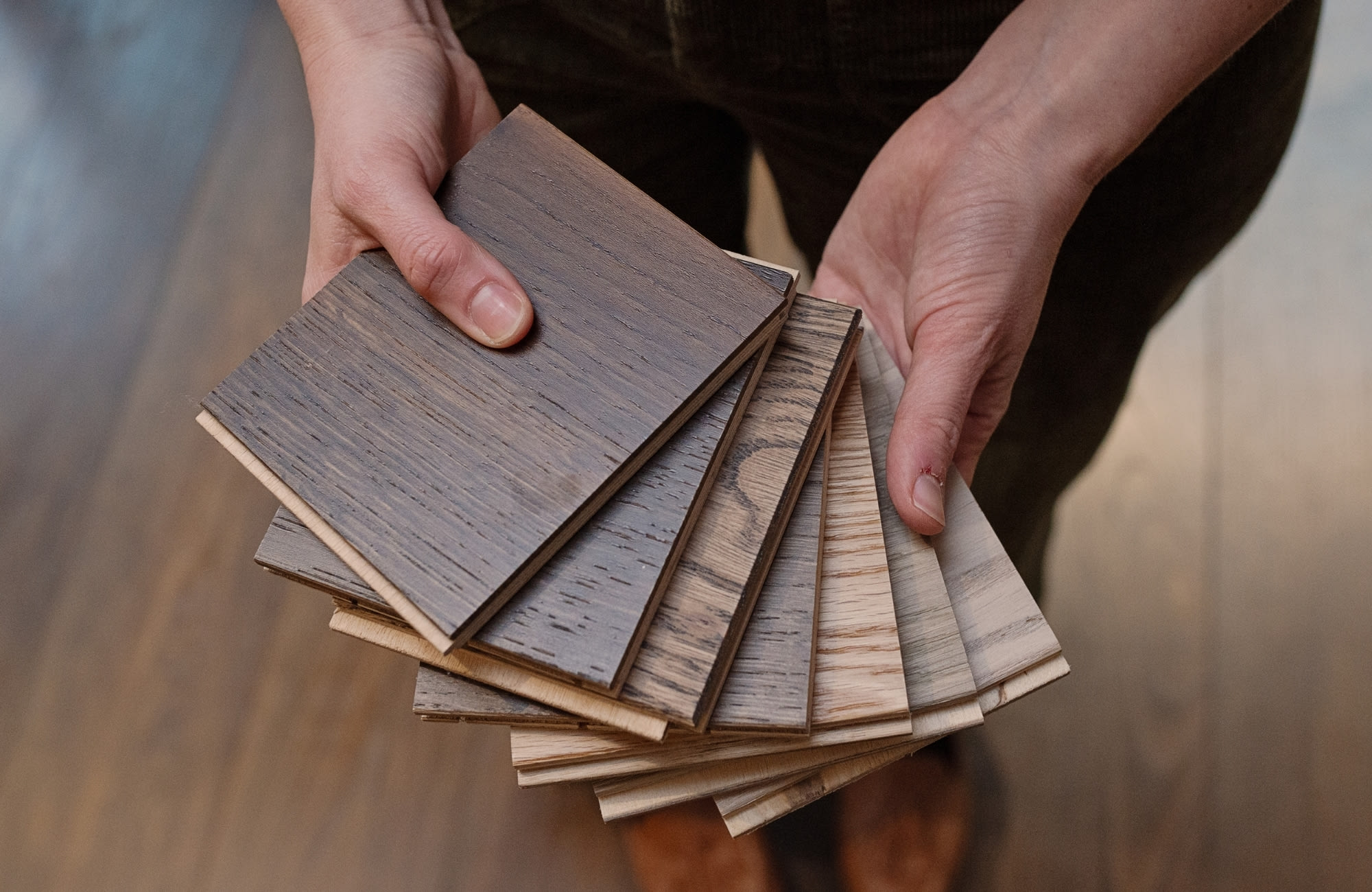
Hardwood floor samples are physical pieces of the actual product sent to your home for review. They are the closest thing to seeing the floor in your space before committing to a full installation.
The Power of Reviewing Samples in Your Own Space
The single biggest advantage of hardwood floor samples is that you can see them in the exact light, against the exact walls, and next to the exact materials of the room they will eventually fill. A pale oak sample that looks warm in a showroom can look cool in your north-facing living room. A smoked grey sample that reads dramatic in a magazine can read perfectly balanced in your kitchen. The only reliable way to test these interactions is to see the samples in their intended space.
Reviewing Samples Throughout the Day
Natural light shifts dramatically throughout the day, and wood floors respond to those shifts. Morning light tends to be cooler, midday light is more neutral, and evening light leans warmer. A good evaluation involves placing hardwood floor samples in the room and observing them at different times across at least a full day. This reveals how the floor will actually feel to live with rather than how it appears in a single moment.
Comparing Samples Against Real Materials
Samples also let you compare the wood directly against the materials it will share space with. Place the samples next to your sofa, your curtains, your stone countertops, your existing joinery, and your wall color. Materials that look harmonious in isolation can clash when paired, and only direct comparison reveals these issues before installation.

What Showroom Visits Tell You
Showroom visits give you the full picture of the product at installation scale, with expert guidance and a complete view of available ranges. Havwoods operates showrooms in New York City and Portland, Oregon, where the full product range is on display alongside expert advisors.
Access to the Full Product Range
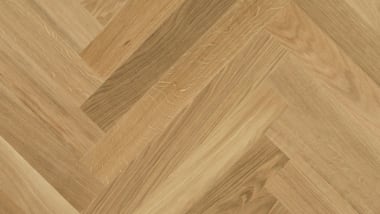
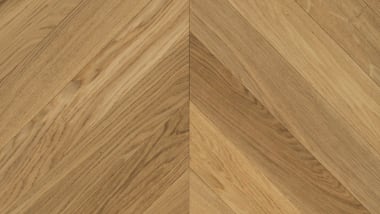
Showrooms also expose you to options you might not have considered. Browsing online or ordering wood floor samples often involves narrowing choices early based on what catches your eye in images. A showroom visit lets you see the full breadth of what is available, often revealing finishes, species, or formats that suit your project better than your initial shortlist.
Expert Guidance
Showroom advisors handle hundreds of projects and can offer practical guidance that is difficult to access remotely. They can flag specification mistakes, suggest options that solve specific design problems, and connect you with the technical resources needed to specify correctly for your subfloor, climate, and installation method. This human expertise is one of the strongest reasons to combine showroom visits with at-home sample reviews.
The Limits of Showroom Visits
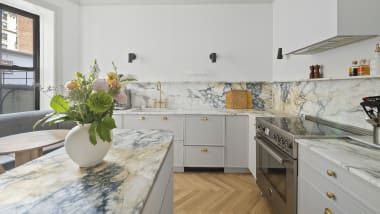
The main limitation of a showroom is that it is not your home. The lighting, surrounding materials, and architectural context are all different from the space the floor will eventually fill. A floor that looks perfect in a showroom can read very differently in your actual room, which is why showroom visits work best when followed by wood floor samples reviewed at home.
Combining Both Approaches for Better Results
The most effective specification process combines showroom visits and hardwood floor samples. Each approach answers questions the other cannot, and together they give you the full picture needed to commit to a major flooring investment.
A Recommended Workflow
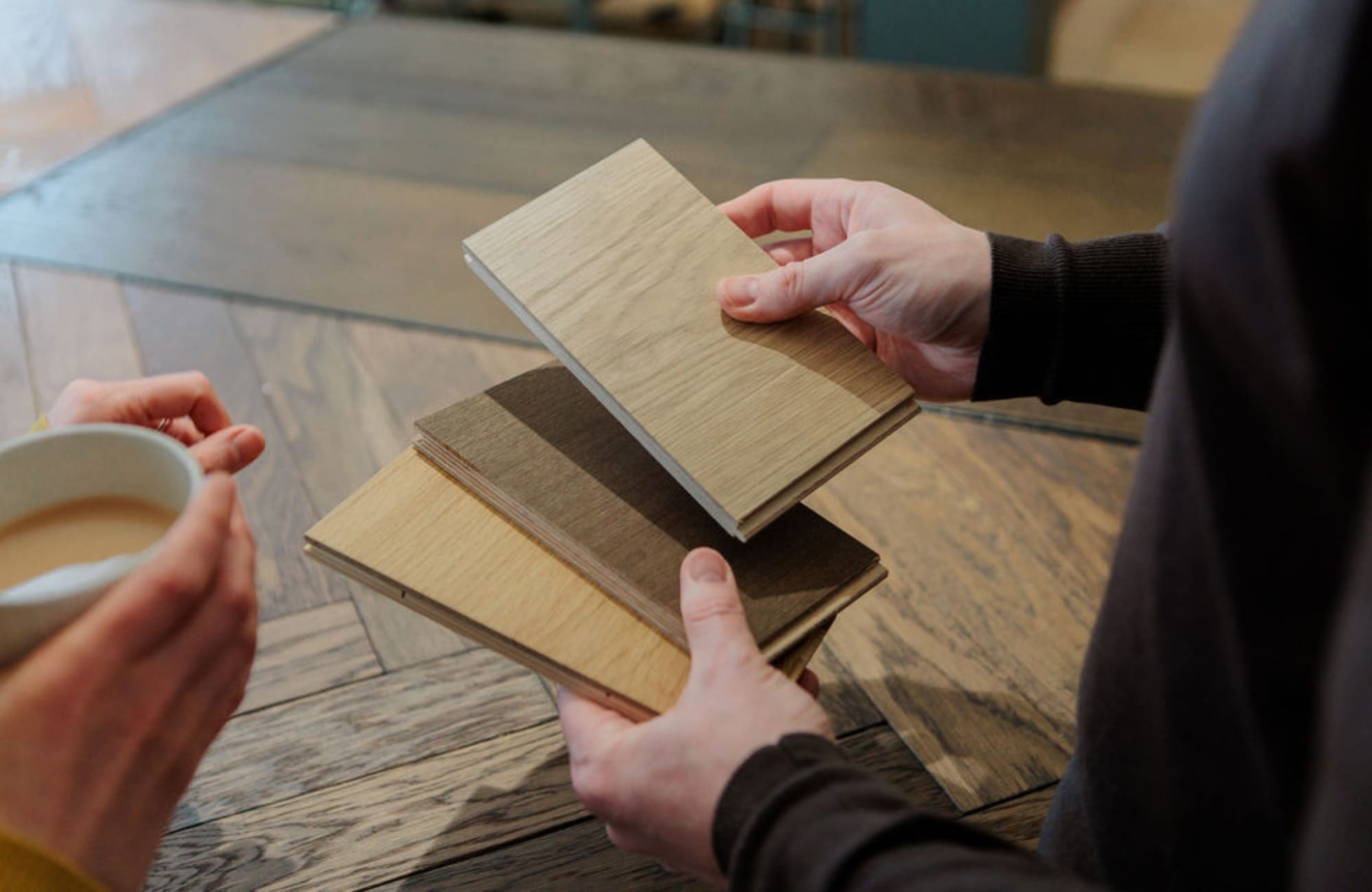
Start with a showroom visit to explore the full range, see floors at installation scale, and get expert input on which options suit your project. Use that experience to shortlist a small number of strong candidates. Then order wood floor samples of those candidates and review them in your actual space, in different light conditions, against your other materials. This workflow gives you the breadth of the showroom and the precision of in-home review.

Using Both Stages to Avoid Common Mistakes
This combined approach helps avoid several common specification mistakes. It prevents you from choosing a floor based on a single showroom impression that does not translate to your home. It prevents you from missing better options you would never have discovered by browsing online alone. And it ensures that the floor you choose actually performs visually in the space it will fill.
Practical Tips for Reviewing Wood Floor Samples and Showroom Displays
A few practical habits make both stages more useful, and the difference between a rushed review and a thoughtful one often shows up years later in how satisfied you are with the floor. Whether you are working with a designer or specifying the floor yourself, building these habits into your process produces better results and helps avoid the kind of small regrets that compound over the lifespan of a major flooring investment.

Take Your Time
Both showroom visits and wood floor samples reward patience. A quick showroom walk-through or a five-minute glance at samples will give you superficial impressions rather than reliable information. Plan to spend real time on each stage of the decision.
Bring Other Materials
When visiting a showroom, bring fabric swatches, paint chips, or photographs of your existing materials. When reviewing samples at home, place them against the actual furniture, walls, and surfaces they will live with. The interactions between materials matter more than any single material in isolation.
Trust the Process
Both methods produce more reliable decisions than online research alone. Even experienced designers rely on samples and showroom visits because the stakes are high enough to demand it. For homeowners making a once-in-a-decade flooring decision, taking advantage of both resources is one of the smartest investments you can make.
The Final Word
Hardwood floor samples and showroom visits are not competing options. They are complementary stages in a smart specification process. Showrooms give you scale, range, and expert guidance. Samples give you precision, real-world context, and the ability to test color and finish in the space the floor will actually fill. The best decisions come from using both. For anyone planning a serious flooring investment, ordering wood floor samples after a showroom visit is the most reliable way to make sure the final floor lives up to its potential.

