











What Is the Best Flooring for Stairs? Expert Insights for Every Home
19 May 2026
Stairs are one of the hardest-working architectural features in any home, and the flooring choice you make for them has consequences for safety, durability, design, and resale value. Unlike a single room, a staircase connects multiple parts of the home and is visible from many angles, which means the flooring decision needs to balance practicality with strong design impact. Choosing the best flooring for stairs comes down to understanding the demands of the application, knowing what materials perform well, and matching the specification to the way the staircase actually fits into the wider home.
Why the Best Flooring for Stairs Requires Special Consideration
Stairs are not just another surface to cover. They face a unique combination of structural, safety, and aesthetic requirements that flooring in flat rooms simply does not encounter.
Constant High-Traffic Wear
Staircases see more concentrated foot traffic than almost any other part of the home. Every trip between floors involves the same set of treads, and that repeated wear takes a toll on materials that would last decades in a living room. The best flooring for stairs has to handle this intensity of use without showing premature wear, scratching, or denting.
Safety and Slip Resistance
A flat floor that becomes slightly slippery is an inconvenience. A staircase that becomes slippery is a genuine safety risk. Stair flooring needs to provide a reliable footing, particularly on the leading edge of each tread. Surface finish, texture, and the inclusion of stair nosing all play into how safely a staircase performs in real life.
Visual Impact and Sightlines
Because staircases are typically visible from multiple rooms, the flooring choice has an outsized effect on the overall feel of the home. A staircase in a poor finish can drag down the perceived quality of an entire interior, while well-specified stair flooring can become a defining architectural feature that lifts the rest of the design.
Acoustic Performance
Stairs are noisy by nature, and the flooring choice influences how much of that noise travels through the home. Hard surfaces transmit sound more readily than softer materials, which is a consideration for households where the staircase sits near bedrooms or other quiet areas.
The Main Flooring Options for Stairs
Several materials are commonly considered for staircase applications. Each has its own strengths and limitations, and understanding them is the foundation for making a sound choice.
Hardwood Flooring
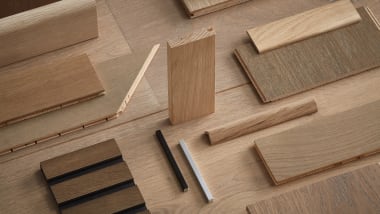
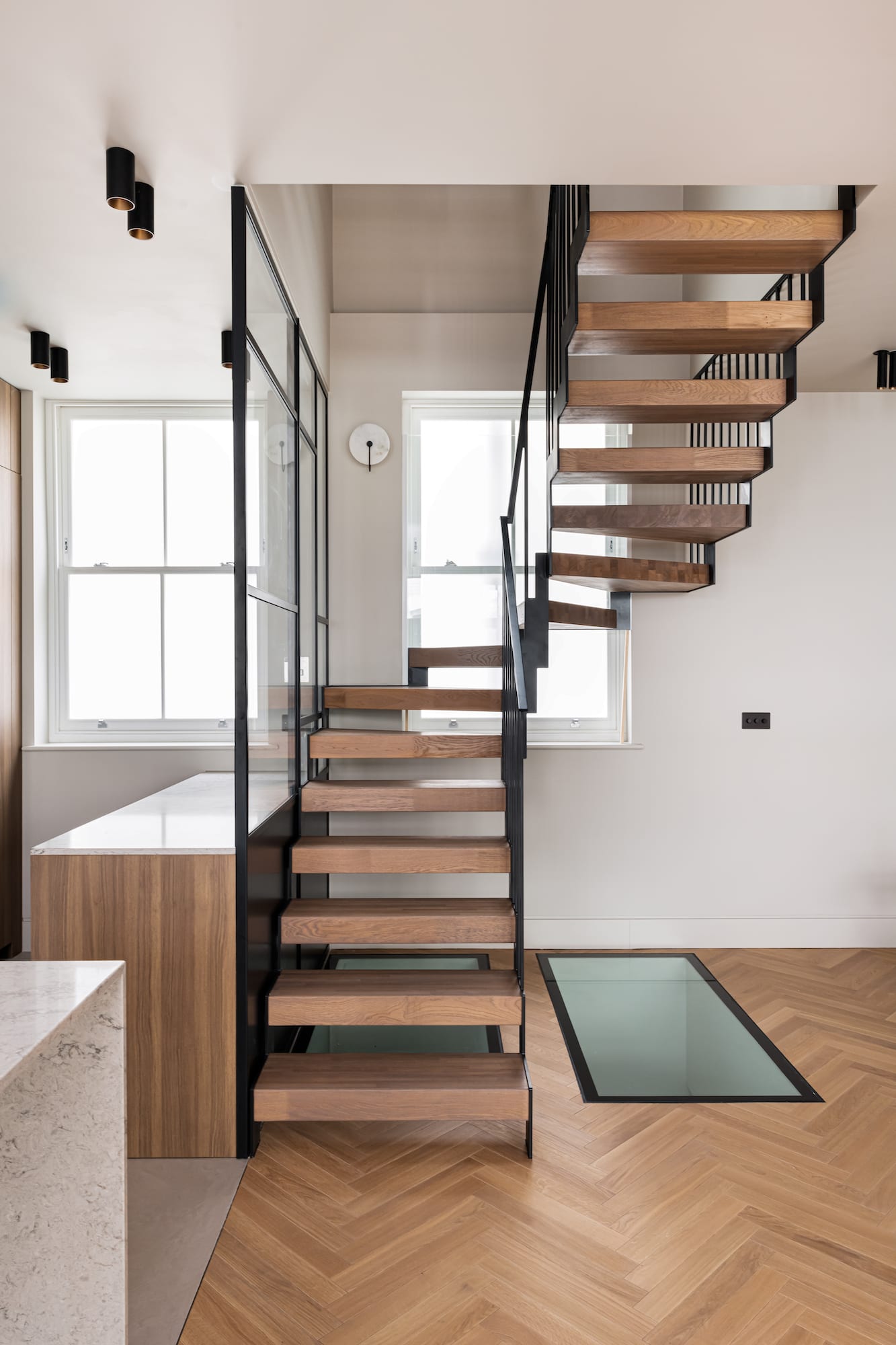
Hardwood is the most popular premium choice for staircases in luxury residential design. It delivers warmth, character, and visual continuity with the surrounding rooms, and it performs reliably over decades when properly specified. Hardwood stair treads can be sanded and refinished multiple times across the lifespan of the staircase, which means the surface continues to look fresh long after lesser materials would need replacing. For most luxury homes, hardwood is the strongest answer to the question of the best flooring for stairs.
Engineered Wood Flooring
Engineered wood flooring is increasingly specified for stairs because it combines the look of real hardwood with greater dimensional stability. The construction features a real hardwood wear layer bonded to a stable multi-layer core, which handles temperature and humidity changes far better than solid wood. Engineered wood is particularly useful in stairs that sit near kitchens, bathrooms, or outdoor entries, where exposure to environmental variation is part of daily life. Havwoods offers engineered options across collections such as Venture Plank, Pureplank, Henley, and the Italian Collection, with stair nosing and matching profiles available through the Stairs and Profiles category.
Carpet
Carpet has been a traditional staple for staircases, particularly in primary residences and traditional homes. It offers a softer feel underfoot, strong acoustic performance, and good slip resistance when fitted correctly. The downside is that carpet wears visibly with use, particularly on the leading edge of each tread, and it can quickly show its age in a busy household. Carpet runners over hardwood stairs deliver many of the same benefits while preserving the visual impact of wood beneath.
Tile and Stone
Tile and stone are durable, dramatic options for staircases in certain architectural contexts. They suit grand entry halls, Mediterranean-style homes, and commercial buildings, but they tend to be cold, hard, and noisy in residential applications. Slip resistance can also be a concern with polished stone or glossy tile, which is why these materials are usually combined with textured finishes or anti-slip treatments when used on stairs.
Laminate and Vinyl
Laminate and vinyl are lower-cost alternatives that can mimic the look of wood at a fraction of the price. They are sometimes considered for stairs in rental properties or budget renovations, but they generally lack the durability and lasting visual quality that staircases demand. For luxury residential projects, these materials rarely meet the standard required.
Why Hardwood Often Stands Out as the Best Flooring for Stairs
For most premium residential projects, hardwood emerges as the strongest answer. Several factors drive this conclusion.
Architectural Continuity
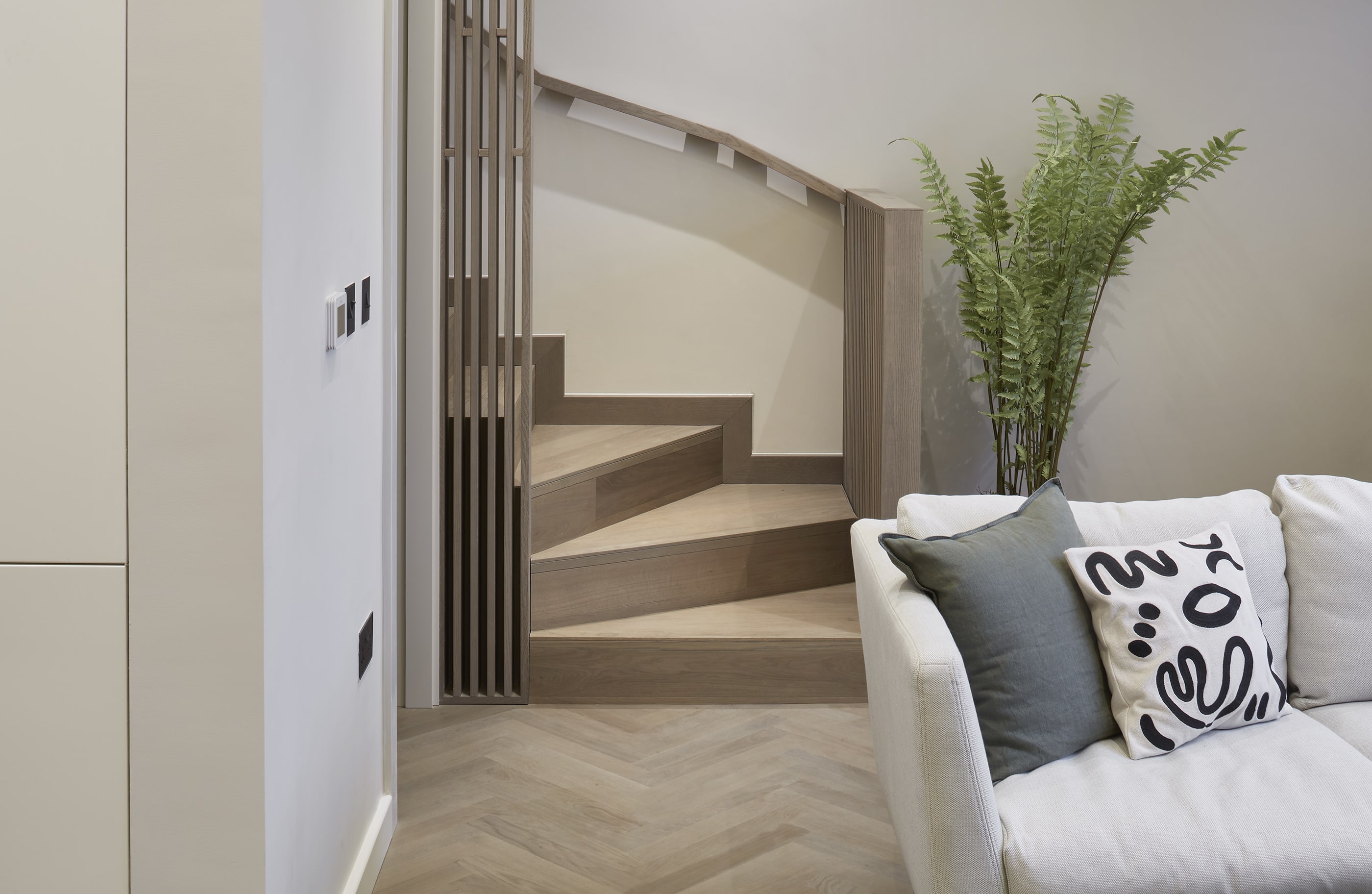
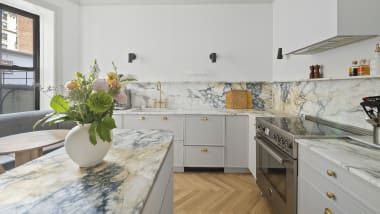
Most contemporary luxury homes feature continuous wood flooring across primary living areas, and the staircase is a natural extension of that material story. Carrying the same hardwood species, color, and finish from the main floors up through the stair treads creates a sense of architectural cohesion that few other approaches can match. The staircase becomes part of the design rather than a visual break.
Long-Term Durability
Quality hardwood treads, properly finished and maintained, will last for decades. Solid hardwood can be sanded and refinished many times across its lifespan, and engineered wood with a thick wear layer offers similar long-term flexibility. This longevity means the cost of the installation amortizes across many years of use, which makes hardwood one of the most economical choices over the full life of a home.

Investment Value
Real estate professionals consistently rank quality hardwood floors among the most desirable features for buyers, and hardwood staircases are a particularly visible part of that value. A home with beautifully finished wood stairs reads as more refined and better cared for than one with worn carpet or basic alternatives, which can translate directly into stronger resale outcomes.
Design Flexibility
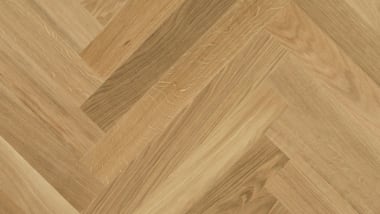
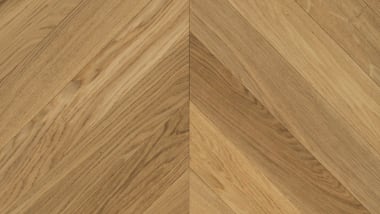
Hardwood stair treads can be specified in nearly any species, color, and finish, which gives designers enormous flexibility. Pale oak treads suit Scandinavian and contemporary homes. Rich walnut delivers drama and traditional warmth. Smoky grey and platinum tones lean modern. Whatever the rest of the interior calls for, hardwood can be tuned to match.
Choosing the Right Hardwood for Your Stairs
Within the hardwood category, several decisions shape how the staircase performs and how it looks.
Species Selection
European Oak is the most widely specified species for stair flooring because of its strength, even grain, and ability to accept a wide range of finishes. American Black Walnut offers a darker, richer alternative for projects that want naturally deep tones. Both species perform well on stairs and integrate beautifully with matching floors in adjacent rooms.

Solid Versus Engineered Construction
Solid hardwood stair treads remain a strong choice for traditional applications and for homes where the floors above and below are also solid wood. Engineered construction has gained ground in contemporary projects because of its dimensional stability, particularly in homes with underfloor heating, large window expanses, or open layouts where humidity and temperature can shift. Many manufacturers offer engineered stair treads and nosing that match their flooring ranges, which makes coordination straightforward.
Surface Finish and Texture
The finish on a stair tread needs to balance beauty with safety. Matte and satin finishes are generally preferable to high-gloss surfaces, which can become slippery and visually distracting on stairs. Brushed and lightly textured finishes add subtle grip underfoot while emphasizing the natural grain of the wood. The Havwoods Handgrade Premier range, for example, includes textured oak finishes that perform exceptionally well in stair applications.
Matching the Treads to the Floors
For a coherent design, stair treads should coordinate with the flooring in the rooms they connect. The simplest approach is to specify treads in the same range as the main flooring, with matching color, finish, and grade. This produces a seamless transition between rooms and stairs, which is the standard for contemporary luxury design.
Practical Specification Considerations for Stair Flooring
A successful staircase installation depends on more than just the right material. Several practical details make the difference between a good result and a great one.
Stair Nosing
The leading edge of each tread is the most heavily used part of the stair and the most important for safety. A well-specified stair nosing provides a clear visual edge, reinforces the structural integrity of the tread, and improves slip resistance. Matching nosing profiles are available across most quality hardwood ranges, including the Havwoods Stairs and Profiles category, which allows designers to specify visually consistent stair details.
Riser Treatment
The vertical face of each step is the riser, and its finish has a major impact on how the staircase reads. Painted risers in white or a soft contrasting color produce a classic, light-feeling staircase. Stained wood risers that match the treads create a more uniform, modern look. Some designers opt for contrasting tones, with dark treads above pale risers or vice versa, for a more graphic effect.
Handrails and Trim
Handrails, balustrades, and trim pieces all need to coordinate with the stair flooring. Hardwood handrails in a matching species and finish tie the staircase together visually. Painted or metal handrails offer contrast that can elevate contemporary schemes. The Havwoods range of flooring profiles and accessories allows these details to be specified in coordinated finishes.
Installation Quality
Stairs are unforgiving when installation quality is poor. Treads must be cut precisely, secured fully, and finished cleanly. The work should be carried out by an experienced installer who specializes in staircase fabrication, particularly for homes where the staircase is a primary architectural feature.
Caring for Hardwood Stair Flooring
Once installed, a hardwood staircase rewards regular care with a long, beautiful lifespan. Routine sweeping or vacuuming with a hard-floor setting removes the grit that causes most scratches. A barely damp microfiber mop with a manufacturer-approved wood floor cleaner handles deeper cleaning without exposing the treads to standing water. Avoid wet mopping, steam cleaners, and harsh chemicals, all of which can damage the finish over time.
The leading edge of each tread will wear faster than the rest of the surface. Quality hardwood allows this wear to be addressed through localized refinishing or, when needed, full sanding and refinishing of the staircase. Oiled finishes are particularly forgiving because they can be touched up without disrupting the rest of the floor.


Where Different Stair Flooring Works Best
The best flooring for stairs is not the same in every situation. Matching the material to the specific application produces the best results.
Primary Staircases in Luxury Homes
For the main staircase in a luxury residence, hardwood is almost always the strongest choice. The visual impact, durability, and long-term value all point in the same direction, and the staircase becomes a defining architectural element rather than a transitional space.
Secondary staircases in basements, attics, or service areas may not need the same investment. Engineered wood, hardwearing carpet, or even painted wood can perform well in these less visible parts of the home while keeping costs reasonable.
Commercial and Hospitality Staircases
In hotels, restaurants, and retail environments, the staircase is often a central feature of the guest experience. Hardwood, particularly engineered formats with a thick wear layer, performs well in these settings while delivering the design impact required to support the brand. Stone and tile can suit certain commercial contexts, but they need to be carefully specified for safety and acoustics.
The Final Word on Stair Flooring
Choosing the best flooring for stairs comes down to balancing durability, safety, design, and long-term value. For most premium residential projects, hardwood stands out as the strongest answer. It delivers visual continuity with the surrounding rooms, lasts for decades when properly maintained, and continues to feel relevant as design trends move around it. Engineered wood expands the practical reach of hardwood by handling humidity and temperature better than solid timber, which makes it the default for many contemporary homes.
Whatever the specific direction, the staircase deserves the same level of design attention as any other major feature in the home. Done well, it lifts the perception of the entire interior. Done poorly, it drags everything else down with it. For homeowners and designers building interiors that need to perform and impress for the long term, investing in the right stair flooring is one of the most rewarding decisions available.