














Why Herringbone Wood Floors Are a Designer Favorite
29 May 2026
Walk into a thoughtfully designed home, hotel, or high-end retail space, and there is a good chance the floor underfoot will be laid in herringbone. The pattern has become a near-universal signature of considered design, and few flooring choices generate as much consistent enthusiasm from interior designers as herringbone wood floors. The reasons run deeper than fashion. Herringbone offers a unique combination of architectural rhythm, historical pedigree, and design versatility that few other flooring options can match.
The Enduring Appeal of Herringbone Wood Floors
Herringbone is one of the oldest decorative floor patterns still in regular use, and it has earned its place in the design world through centuries of refinement.
A Pattern Rooted in Architectural History
The herringbone pattern takes its name from the resemblance of the layout to the skeleton of a herring fish. It has been used in flooring, masonry, and textiles since Roman times, when builders discovered that interlocking rectangular pieces created stronger, more stable surfaces. In flooring, herringbone became a fixture of European grand homes, particularly in seventeenth and eighteenth century France and England, where parquet floors were a symbol of architectural sophistication. Today, that pedigree is one of the reasons designers continue to specify herringbone wood floors. The pattern carries an inherent sense of craft and intention that elevates any space it appears in.
The Visual Effect of the Pattern
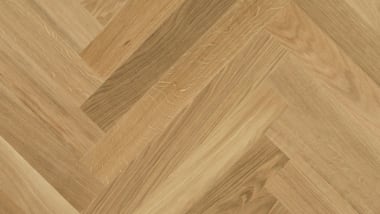
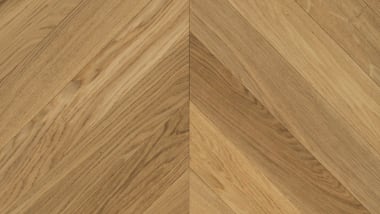
What makes herringbone so visually powerful is the way the planks interlock. Each rectangular board sits at a ninety-degree angle to its neighbor, creating a series of small zig-zags that read as both orderly and dynamic. The eye is drawn across the floor rather than along it, which gives a room a sense of energy and depth. Unlike chevron, where boards meet point to point, herringbone planks are cut with simple straight ends, which makes the pattern slightly more forgiving and more flexible in scale.
A Design Language That Crosses Styles
One of the strongest reasons designers reach for herringbone wood floors is how easily the pattern translates across design styles. It feels equally at home in a heritage townhouse, a contemporary penthouse, a country home, and a minimalist apartment. By varying the species, color, finish, and plank size, the same fundamental pattern can read as classic, modern, rustic, or refined.
Why Designers Specify Herringbone Wood Floors
Beyond aesthetics, herringbone offers practical and strategic advantages that explain its dominance in professional design specifications.
Architectural Impact Without Additional Decoration
Herringbone flooring brings architectural interest to a room before any other design decisions are made. For designers working in spaces with minimal architectural detail, such as new-build apartments or open-plan layouts, a herringbone floor delivers structure and rhythm that would otherwise need to be created through joinery, ceiling treatments, or wall paneling. The floor does the heavy lifting, freeing the rest of the design to be quieter and more curated.

A Signal of Quality and Craft
Specifying a herringbone pattern signals to clients and visitors that the project has been considered at a higher level. The pattern requires more planning, more material, and more skilled installation than a standard plank layout. That visible investment communicates quality, which is exactly why luxury brands, boutique hotels, and high-end residential clients tend to favor herringbone hardwood floors as part of their design language.
Flexibility in Scale and Proportion
Designers love tools that can be tuned to the brief, and herringbone offers that flexibility. Smaller herringbone planks create a tighter, more detailed pattern that suits traditional interiors and smaller rooms. Larger format herringbone, sometimes called grand herringbone, creates a calmer, more contemporary rhythm that flatters open-plan spaces. The ability to adjust the scale of the pattern to the proportions of the room is one of the reasons herringbone remains so adaptable.
The Craftsmanship Behind Herringbone Wood Floors
Herringbone may look effortless when complete, but the quality of the final result depends on careful specification and skilled installation.
Precision Manufacturing
Each plank in a herringbone floor must be milled to consistent dimensions so that the pattern locks together cleanly. Even small variations in board length or width become visible when the planks meet at ninety-degree angles. Quality manufacturers produce herringbone boards to tight tolerances, which is part of what separates a premium herringbone wood floor from a budget alternative.

Engineered Construction for Modern Performance
Most contemporary herringbone installations use engineered construction, in which a real hardwood wear layer is bonded to a stable multi-layer core. This approach delivers the authentic look of solid wood while offering far better dimensional stability across changes in humidity and temperature. Engineered herringbone is well suited to open-plan layouts, large window expanses, and homes with underfloor heating. Havwoods offers herringbone formats across several of its premium ranges, with European Oak being the species most often specified for both residential and commercial herringbone projects.
The Importance of Skilled Installation
A herringbone floor is only as good as the installer behind it. The pattern must be set out carefully from a central reference line so that the symmetry reads correctly across the entire room. Borders, transitions, and door thresholds all require additional thought to maintain the integrity of the pattern. This is why designers tend to work with experienced fitters who specialize in patterned floors, and why a well-installed herringbone hardwood floor is genuinely an investment in craft.
Choosing the Right Herringbone Wood Floors for a Project
The strength of herringbone is that it offers so many design directions. The challenge is making the right calls within that flexibility.
Species and Color
European Oak dominates the herringbone market for good reason. Its fine, even grain reads beautifully in a herringbone pattern, and it takes a wide range of stains and finishes. Pale and blonde-toned oaks bring a calm, contemporary feel that suits Scandinavian and coastal schemes. Honey and Auburn tones add warmth to traditional and transitional interiors. Smoky Grey and Platinum oaks lean modern, while Cocoa, Brunette, and Monochrome finishes create dramatic, moodier spaces. Havwoods organizes its woods into clear color groups, which makes it easier to coordinate herringbone flooring with the wider material palette.
Plank Size and Format
Plank dimensions have a major influence on how a herringbone pattern reads. Traditional herringbone uses relatively small boards, which creates a tight, classical feel. Larger format herringbone uses longer and wider planks, which produces a calmer, more contemporary look. Designers working in open-plan spaces tend to favor larger formats, while those working in smaller, more detailed interiors often choose the traditional scale.
Where Herringbone Wood Floors Make the Biggest Impact
Herringbone is versatile enough to suit almost any room, but certain settings allow the pattern to do its most powerful work.
Entryways and Reception Areas
The first impression of a home or commercial space is often made at the entrance, and herringbone delivers an immediate sense of arrival. The rhythm of the pattern draws the eye forward and signals that the rest of the space has been designed with care.
Living and Dining Rooms
In primary living and dining areas, herringbone wood floors give the architecture a built-in sense of formality without feeling rigid. The pattern anchors statement furniture, frames artwork, and adds energy to large open layouts. In homes where living and dining spaces flow together, a continuous herringbone floor unifies the rooms while still giving each its own visual presence.
Kitchens and Hospitality Spaces
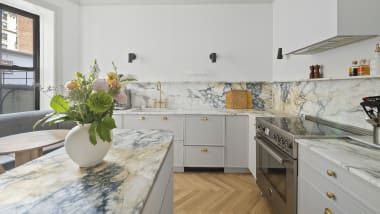
Engineered herringbone flooring performs particularly well in kitchens, restaurants, and boutique hotels. The pattern adds character to spaces that would otherwise rely heavily on cabinetry or millwork for visual interest, and modern engineered construction stands up to the moisture, heat, and traffic these environments demand.
Pairing Herringbone Wood Floors With Wider Design
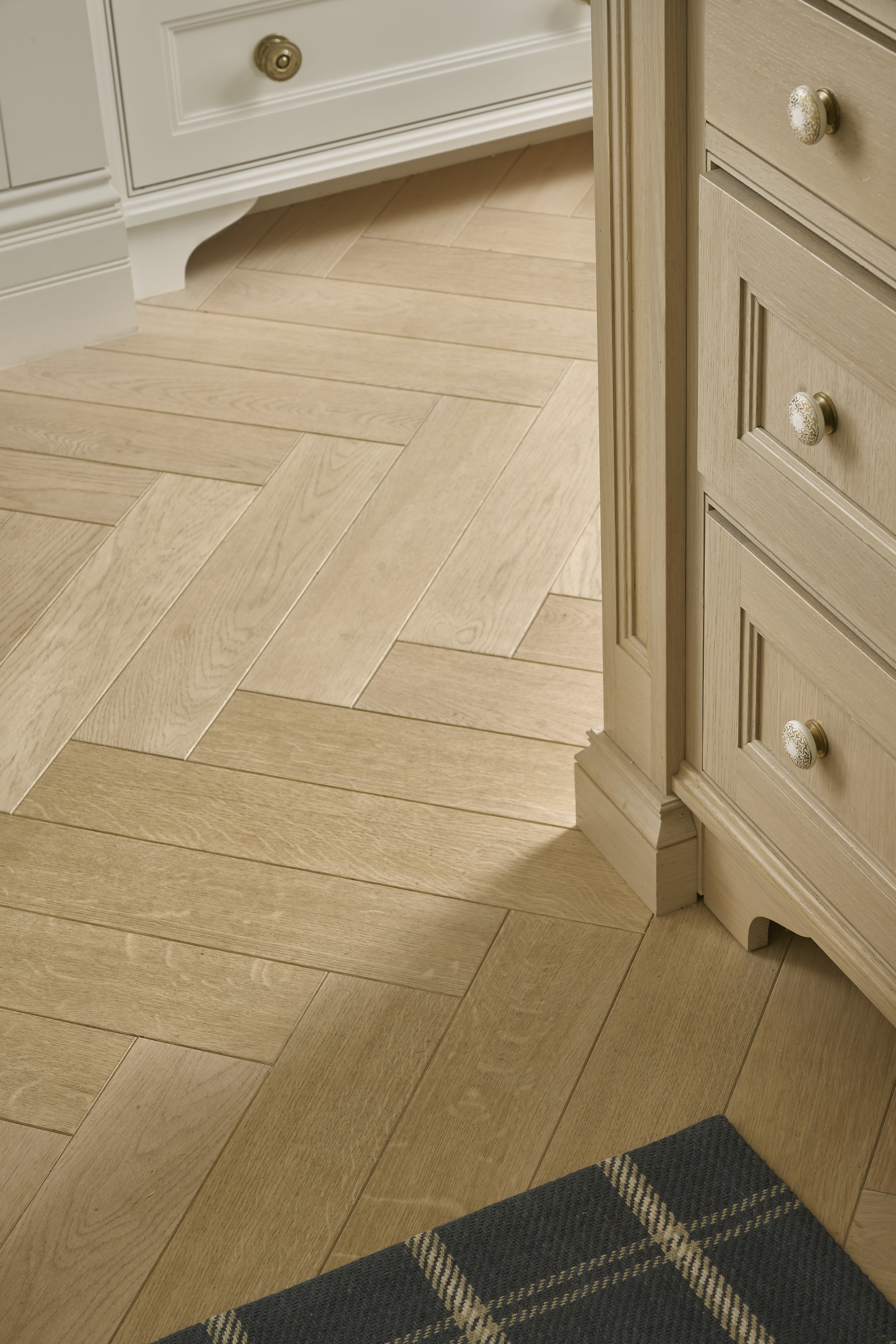
The most successful herringbone installations come from treating the floor as part of a complete material story. Pale oak herringbone pairs naturally with linen, marble, and brushed metals for a light, contemporary look. Darker herringbone tones work beautifully alongside leather, rich upholstery, and warm metals such as bronze or antique brass. Walls finished in plaster, paneled joinery, or natural stone gain additional depth when set above a herringbone floor. Because the floor brings so much visual rhythm, the rest of the palette can afford to be quieter, which tends to produce more refined and balanced interiors.
The Lasting Value of Herringbone Wood Floors
Herringbone wood floors continue to dominate the design industry because they deliver on every front a designer needs. They bring architectural impact, signal quality and craft, age gracefully across decades, and adapt to almost any style direction. For homeowners and designers looking for a flooring choice that will still look compelling in twenty years, herringbone remains one of the most reliable answers available. The pattern has earned its place through centuries of use, and the contemporary interest in herringbone hardwood floors shows no sign of fading.
For projects where the floor needs to do more than simply cover the ground, herringbone offers a foundation that lifts everything built on top of it. It is the kind of design choice that rewards investment, holds its value, and continues to feel relevant long after the rest of the interior has been refreshed.

