

























Top durable flooring options for high-traffic spaces
31 Mar 2026
Selecting flooring for high-traffic commercial spaces requires balancing durability, maintenance, acoustics, compliance and design intent. While materials such as vinyl, concrete and tile deliver strong utilitarian performance, engineered timber offers a compelling balance of durability, repairability and architectural quality when specified correctly. The most effective choice depends on the specific use case, with each material suited to different environments and performance requirements.
When specifying flooring for high-traffic commercial environments, appearance matters. But performance matters more. In hospitality venues, retail environments, workplaces, education settings and aged care projects, flooring absorbs constant foot traffic, rolling loads, cleaning regimes, furniture movement and the day-to-day wear that quickly exposes poor material decisions.
The right flooring specification needs to balance durability, maintenance, acoustics, installation method, subfloor conditions and design intent, not just upfront cost.
That is why the conversation around durable flooring options for high-traffic spaces should never start with aesthetics alone. It should start with how the space is used, what the floor will be asked to do, and how it needs to perform over time.
What makes flooring durable in high-traffic commercial settings?
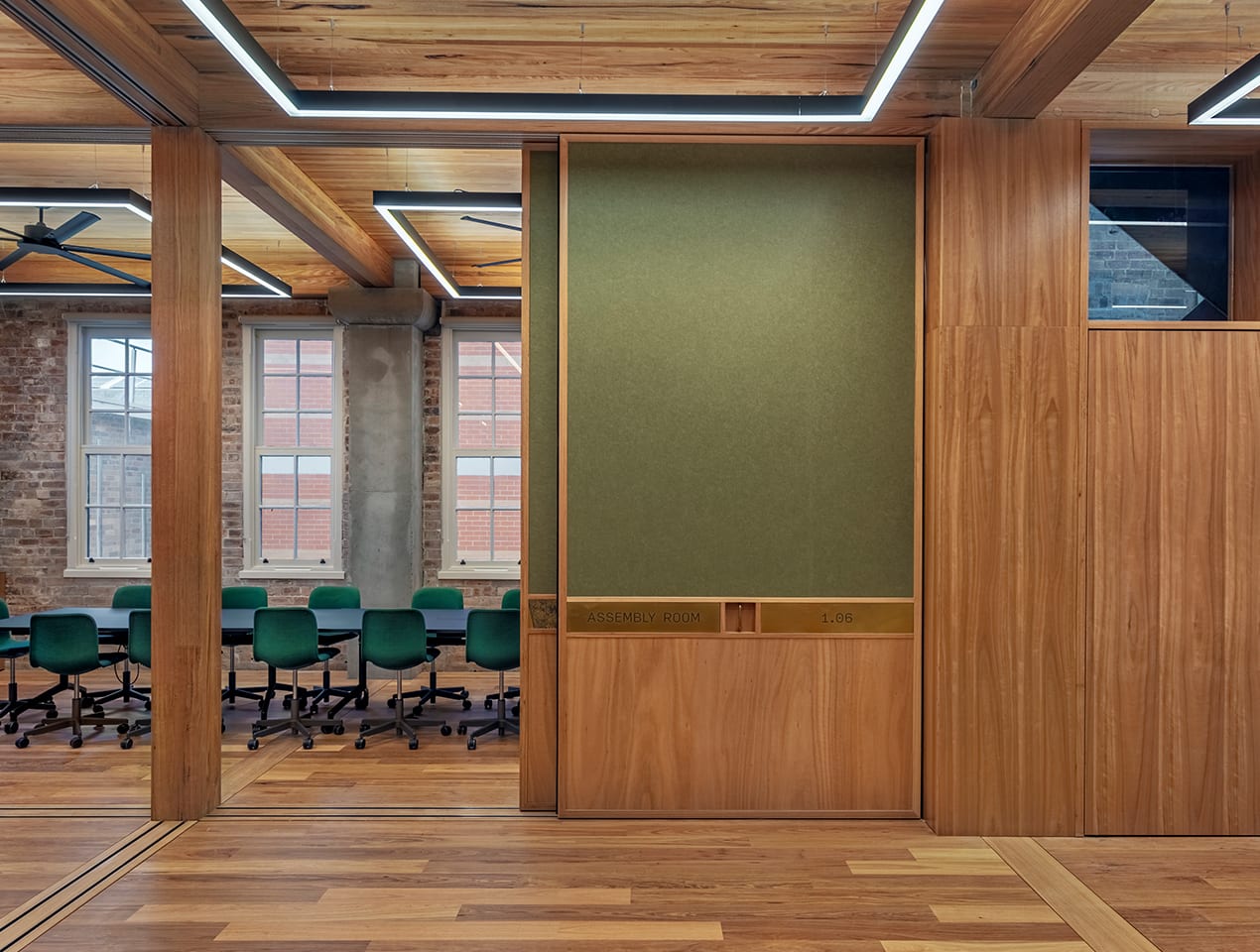
Durability is not one single attribute. In commercial flooring, it is the combined result of material hardness, construction, finish performance, installation quality and ongoing maintenance.
For timber and timber-look systems, details such as wear layer thickness, board construction, subfloor compatibility, expansion allowances and the chosen installation method all play a direct role in long-term performance.
In practice, a durable floor for a high-traffic setting should be assessed against:
- expected footfall and point loading
- resistance to scratching, denting and surface wear
- cleanability and maintenance demands
- acoustic performance
- slip resistance requirements
- moisture and subfloor conditions
- repairability and lifecycle value
That last point is often overlooked. A floor that can be repaired, recoated or selectively replaced may offer stronger long-term value than an option that must be fully removed once it shows wear.
The top durable flooring options for high-traffic commercial spaces
There is no universal best flooring type for every commercial environment. The strongest specification is always context-specific. Still, a small group of materials consistently performs well when durability is the priority.
1. Engineered timber flooring
For projects that need a premium finish without compromising on commercial performance, engineered timber remains one of the strongest options available.
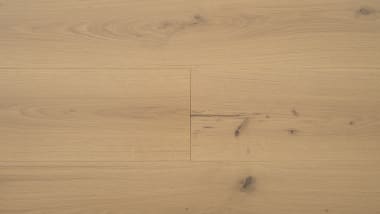
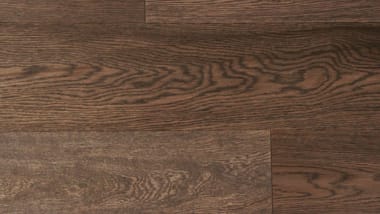
High-quality engineered timber flooring combines a real hardwood wear layer with a stable multi-layered construction. That matters in Australian projects, where dimensional stability, ease of installation and consistent appearance are all critical.
Havwoods engineered oak flooring, for example, offers enhanced structural stability for Australian conditions, and its specification guidance highlights suitability for underfloor heating, glue-down installation and acoustically optimised builds when paired with the right underlay.
What makes engineered timber a strong high-traffic flooring choice is not simply that it is timber. It is that the better systems are designed to perform under commercial conditions while retaining the warmth, tactility and visual depth that harder synthetic surfaces often lack.
Why engineered timber performs well
A properly specified engineered timber floor can offer:
- a genuine hardwood surface rather than a printed timber look
- commercial-grade wear layers (typically 3-6mm)
- the ability to recoat or refinish in some cases
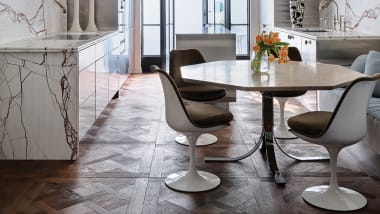
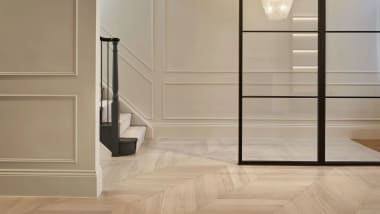
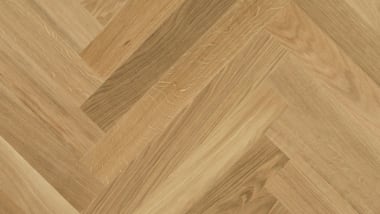
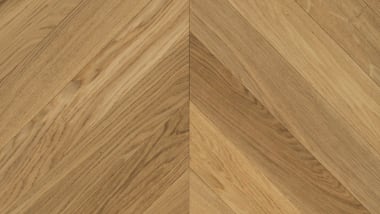
- strong design flexibility across wide planks, herringbone and chevron layouts
- compatibility with glue-down installation for a more solid feel and improved acoustics
- a premium finish suited to workplace, hospitality, retail and residential-adjacent commercial environments
Havwoods’ AU range includes products with 3 mm wear layers, glue-down suitability and underfloor-heating compatibility, while some collections are specifically positioned for demanding environments such as hospitality, retail and office spaces.

Where engineered timber works best
Engineered timber is especially effective in:
- hotel lobbies and guest spaces
- premium retail
- commercial offices
- display suites
- education administration and breakout areas
- aged care common spaces
- wellness and lifestyle-led environments
These are the settings where the floor needs to work hard but also contribute to the atmosphere of the interior. In those spaces, polished concrete can feel too hard, vinyl can feel too utilitarian, and laminate may not deliver the same depth or credibility.
Where engineered timber may not be the primary solution
Engineered timber is not ideal in:
- wet or constantly damp environments
- clinical or infection-controlled spaces
- heavy industrial or trolley-intensive retail
In these cases, timber is often still used in adjacent or customer-facing zones, where design impact is critical.
What to check in the specification
Not all engineered timber is equal. For commercial use, the specification should look closely at:
Wear layer thickness
A thicker wear layer generally supports better longevity and may improve the floor’s ability to tolerate future refinishing, depending on the product construction and site conditions. Havwoods states that engineered timber wear layers can range from 0.6 mm to 6 mm, which is a useful reminder that two products described as engineered timber can perform very differently in service.
Species and hardness
For hardwood flooring Australia projects, species selection matters. Harder timbers generally offer better dent resistance, although hardness alone should never override finish quality, board construction and end-use conditions. Janka hardness is a useful comparative metric, but it should be treated as one input, not the whole decision.
Finish system
Commercial durability often comes down to the finish as much as the board itself. A lacquered or UV-cured factory finish may suit some projects better than oil, particularly where low-maintenance cleaning regimes are required.
Installation method
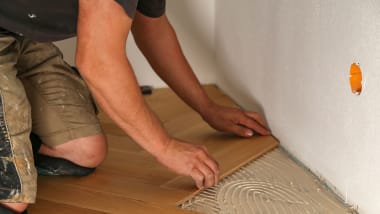
Glue-down systems are often preferred in commercial work because they provide a more stable feel underfoot and can improve acoustic outcomes. Havwoods explicitly recommends glue-down installation as suitable for commercial spaces and high-footfall areas.
Acoustic build-up
In multi-level projects, acoustic compliance matters early. Timber flooring can meet acoustic requirements with an appropriate underlay, but that needs to be considered as part of the whole floor build-up, not as an afterthought. Read more in our Guide to Specifying Timber.

Why Havwoods engineered timber is often the right fit
Where a project needs a floor that is both robust and design-led, Havwoods’ engineered timber range is particularly well suited.
It combines real timber surfaces with commercial specification practicality: broad design choice, glue-down suitability, underfloor-heating options in selected collections, and sustainability-certified ranges for projects with procurement and environmental reporting requirements.
That makes it a compelling option when the brief calls for durability, warmth and architectural credibility in the same material.
Learn more about Havwoods’ engineered timber product range here.
2. Luxury vinyl plank and sheet vinyl
Vinyl remains one of the most commonly specified commercial flooring materials for high-traffic environments because it is practical, resilient and comparatively easy to maintain.
In healthcare-adjacent, education and back-of-house environments, it often performs well because it can absorb heavy daily use, tolerate more demanding cleaning regimes and deliver good slip and acoustic outcomes when correctly specified.
Its strengths are straightforward:
- good resistance to scuffs and staining
- low maintenance requirements
- broad colour and pattern range
- softer underfoot than concrete or tile
- strong suitability for spaces where hygiene and easy cleaning are priorities
Its limitations are equally important. Even high-end vinyl does not replicate the depth, grain variation or ageing characteristics of real timber. In design-led environments, that distinction matters. For projects where the floor is part of the architectural identity rather than just a surface finish, vinyl can feel visually flatter and less enduring.
Vinyl is usually strongest in utility-first spaces. It is less effective where material authenticity is part of the brief.
3. Hybrid flooring

Hybrid flooring is often considered when projects want water resistance and installation efficiency. It can be suitable in selected commercial applications, especially where budget pressure is high and timber aesthetics are desired.
That said, hybrid is not automatically the best answer for every high-traffic project. Its performance depends heavily on the quality of the core, locking system, surface layer and site conditions. Havwoods’ own flooring comparison guidance positions engineered timber, hybrid, laminate and other flooring types differently depending on climate suitability, design flexibility, maintenance and use case.
Hybrid can be effective in lower-impact commercial settings, but in more premium spaces it often falls short in three areas:
- acoustic feel underfoot
- visual authenticity
- long-term repairability
Hybrid can be effective in cost-sensitive commercial projects, but it is often a compromise material rather than a first-choice architectural finish.
4. Laminate flooring
Laminate can offer good abrasion resistance on the surface, which is why it is sometimes shortlisted for high-traffic areas. AC ratings are often used to assess its wear performance, particularly in environments where scratch resistance is a priority.
However, laminate is a surface-driven product. Once the decorative top layer is compromised, it cannot be refinished like real timber. That means lifecycle flexibility is limited. In spaces where a floor is expected to last well beyond first occupancy, or where a premium material language matters, laminate can be a less robust long-term answer than engineered timber.
It can still work in budget-conscious commercial settings. But it is usually specified because of cost efficiency, not because it is the most sophisticated or adaptable flooring solution available.
5. Polished concrete

Polished concrete is undeniably durable and performs exceptionally well under heavy foot traffic, rolling loads and intensive cleaning. It is a logical choice for:
- large-format retail
- public circulation areas
- industrial-style hospitality
- education thoroughfares
- base-building style commercial interiors
Its strengths are wear resistance, low ongoing maintenance and very long service life.
Its trade-offs are equally clear:
- hard underfoot
- less forgiving acoustically
- colder in feel and appearance
- limited softness in spaces where comfort matters
- more difficult to repair invisibly when cracking or staining occurs
Concrete is a strong utilitarian performer. It is not always the right answer where comfort, acoustics or warmth are part of the functional brief.
6. Porcelain tile

Porcelain is another hardwearing option suited to wet areas, entries and some retail environments. It performs well under intense wear and is resistant to moisture, staining and cleaning chemicals.
But like polished concrete, it can create a harder, louder interior experience. Grout maintenance, slip resistance and the visual severity of tiled surfaces can also limit its suitability in more refined commercial schemes.
For some projects, porcelain is the right technical solution. For many others, it solves one problem while introducing new ones.
How to choose the right durable flooring option for commercial applications
A flooring material is only durable when it is durable for the specific use case.
Hospitality

In hospitality spaces, durability and atmosphere need to work together. The floor must cope with continuous traffic, furniture movement and regular cleaning, but it also has to support the guest experience.
Engineered timber is often a strong choice here because it balances durability with warmth and finish quality. Havwoods’ Henley range is explicitly presented as suitable for hospitality, alongside retail and office environments, which aligns well with this application.
Where spill risk or wet-use conditions are constant, the specification may shift toward tile or vinyl in targeted areas, but for dining rooms, lounges and boutique venues, engineered timber usually delivers the better overall result.
Retail

Retail flooring must handle traffic concentration, display changes and visual scrutiny. Customers see the floor at close range, and the interior often has to support brand positioning as much as function.
Engineered timber works particularly well in premium retail because it is durable without feeling institutional. For harder-working value retail environments, polished concrete or vinyl may be more practical.
Commercial office
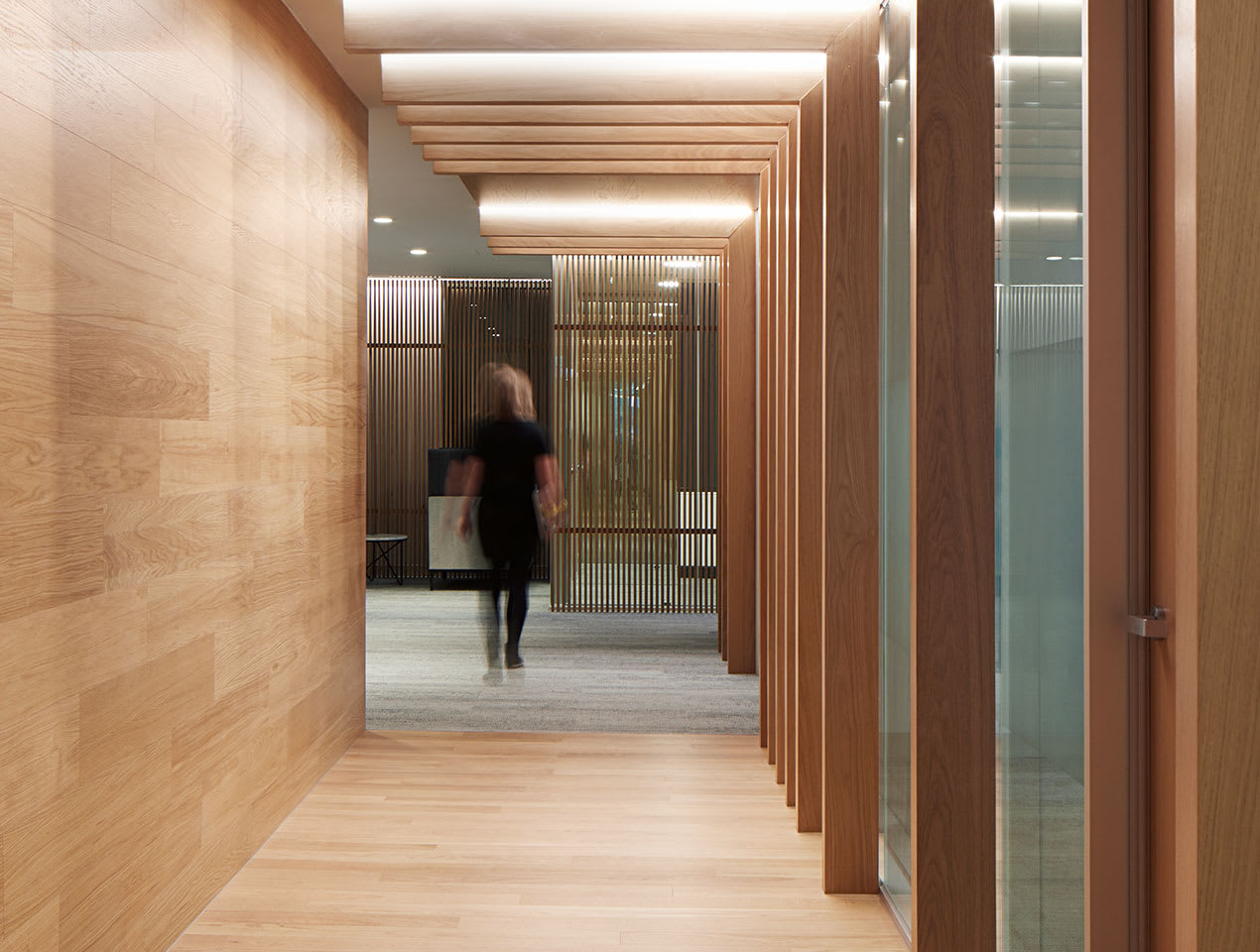
Workplace projects increasingly demand materials that feel refined, support acoustics and create a more residential quality of experience.
Engineered timber performs well in reception areas, meeting suites, executive zones and collaborative spaces, particularly in glue-down installations where acoustic performance and solidity underfoot matter.
For back-of-house or utility-heavy areas, resilient flooring may still be specified elsewhere in the project.
Education

Education settings need flooring that can tolerate heavy daily use and straightforward maintenance. In classrooms, circulation zones and multi-use areas, vinyl and polished concrete are often selected for practical reasons.
But that does not rule out engineered timber. In administration areas, libraries, staff zones and higher-education environments where acoustics and atmosphere matter, timber can be the stronger finish.
Aged care
In aged care, the specification has to weigh durability against comfort, acoustics, maintenance and resident wellbeing. Overly hard surfaces can feel clinical. Overly soft surfaces may not wear well.
Engineered timber often strikes the right balance in shared living and lounge environments, while vinyl may be more appropriate in clinical or service areas.
Our sector specialists
Behind the scenes at Havwoods, our sales team is divided into six dedicated sectors in order to provide you with the most informed service, no matter the nature of your project. Explore each of our specialist sector areas or call 1300 428 966 to talk to our team about your project today.


Key specification factors that are often missed
Even experienced project teams can focus too heavily on the visible finish and not enough on the system behind it.
Subfloor compatibility
No flooring material will perform properly over a subfloor that is out of tolerance, damp or structurally unsuitable.
Havwoods’ installation guidance stresses the importance of method selection and subfloor readiness, which is especially relevant on commercial programmes where site conditions vary across stages.
Acoustic requirements
Acoustics should be resolved before the product is selected, not after. Underlay, adhesive systems and slab build-up all affect outcome. Timber can perform well acoustically, but only if the full system is designed accordingly.
Maintenace reality
A flooring product should be chosen for the way the site will actually be maintained, not the ideal cleaning regime written into a manual. Busy commercial spaces need realistic maintenance pathways.
Visual ageing
Some floors degrade badly. Others develop character. Real timber generally ages with more grace than surface-print products, which is one reason engineered timber remains so valued in premium commercial design.
Slip resistance and compliance
Slip ratings and compliance should be considered early, particularly in wet or public-facing environments.
Lifecycle value
When deciding on flooring, consider repair vs replacement, expected lifespan, and disruption costs during refurbishment.
Sustainaibility and certification
For many commercial projects, durability is no longer enough on its own. Procurement teams and consultants increasingly need evidence around sourcing, certifications and whole-of-life thinking.
Havwoods offers sustainability-certified ranges and highlights certifications including FSC, PEFC, Cradle to Cradle, FloorScore and Indoor Air Comfort Gold across parts of its range, with certification relevance increasing for institutional and government-led briefs.
That matters because a durable floor that also supports responsible specification is often the stronger long-term commercial decision.

So, what is the best flooring for high-traffic commercial spaces?
For purely utilitarian performance, polished concrete, porcelain and resilient vinyl all have a clear place.
But when a project needs a floor that is durable, commercially credible, acoustically considered and visually resolved, engineered timber flooring is often the most balanced answer.
It brings together the performance advantages needed for high-traffic environments with the material authenticity that premium commercial interiors still demand. And when specified well, with the right wear layer, finish, installation method and acoustic build-up, it offers the kind of long-term value that cheaper alternatives often fail to match.
That is why, for many Australian hospitality, retail and workplace projects, Havwoods’ engineered timber collections stand out as a leading solution: real timber surfaces, commercially relevant construction, broad design flexibility and specification support that reflects how these materials are actually used in practice.
In summary
Choosing from the many durable flooring options for high-traffic spaces is not about finding the hardest surface in the market. It is about finding the right material for the operational, acoustic, aesthetic and lifecycle demands of the project.
That is where the specification process matters most. In that context, premium engineered timber remains one of the most complete commercial flooring solutions available.Explore each of our specialist sector areas here or call 1300 428 966 to talk to our team about your project today.